For a construction company, your Google Business Profile is often the first impression a potential client gets. Someone hears your name, types it into Google, and within three seconds they have seen your reviews, your photos and how professional you look. Before they have even opened your website, half the decision is made.
Yet most construction company profiles we see are half finished. Claimed years ago, a logo uploaded, and then forgotten. That is money left on the table, because the profile is free and the enquiries it can generate are some of the best you will get.
Here is how to do it properly.
Get Your Categories Right
Your primary category is one of the strongest signals Google uses to decide when to show your profile. Construction covers a lot of ground, so be precise.
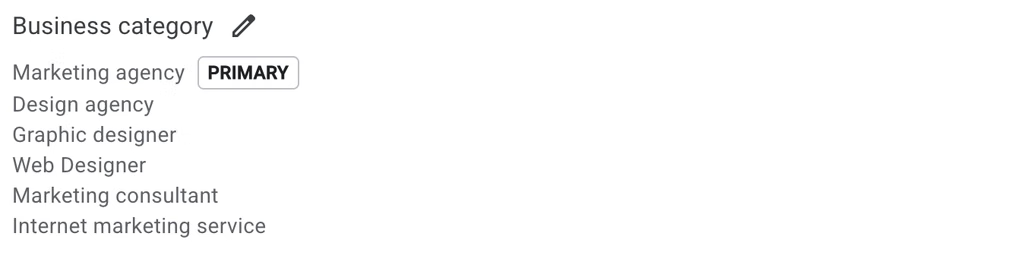
If extensions and residential building work are your bread and butter, “Building firm” or “Construction company” as primary with secondaries like “Loft conversion specialist” or “Bathroom remodeller” tells Google exactly which searches you belong in. If you are mainly groundworks or commercial, choose accordingly. You can add several secondary categories, so cover every service you genuinely offer, and none you do not.
A surprising number of building firms are miscategorised or sitting on a single generic category. Fixing that alone can noticeably improve which searches you appear for.
Photos Win Building Work
Construction is a visual trade, and your profile should prove your quality before anyone asks.
Clients choosing a builder are nervous. They are about to spend serious money and they have all heard horror stories. Good photos calm those nerves better than any sales copy.
Finished projects come first. Completed extensions, renovations and new builds are what clients scroll through when deciding who to shortlist. Progress shots matter too, because foundations, steels and first fix stages show you work in an organised, professional way. Before and after photos from the same angle are the most convincing format there is. And a few shots of the team and the branded vans build trust that you are an established, legitimate firm rather than a phone number and a ladder.
Upload new photos regularly, not in one annual dump. A profile with fresh photos from recent jobs signals an active, busy company. And skip the stock images entirely. People can spot them instantly and they do more harm than good.
Reviews: The Deciding Factor for Big Jobs
The bigger the job, the more the reviews matter. Someone booking a £150 repair might chance it. Someone commissioning a £60,000 extension will read every review you have, and probably your responses too.
Build the habit of asking at the moment of maximum happiness, which is usually at handover when the client is standing in their finished space. Ask them to mention the project type in their review. “They built our two storey extension in Poole and kept every deadline” does far more work for you than “great company”.
Respond to every review, good and bad. A calm, professional response to a critical review often impresses potential clients more than the five star ones, because it shows how you handle problems. Every builder has difficult jobs. Clients just want to know you deal with them like a professional.
Use the Sections Most Builders Ignore
A few parts of the profile get skipped by nearly everyone, which makes them an easy way to stand out.
The description
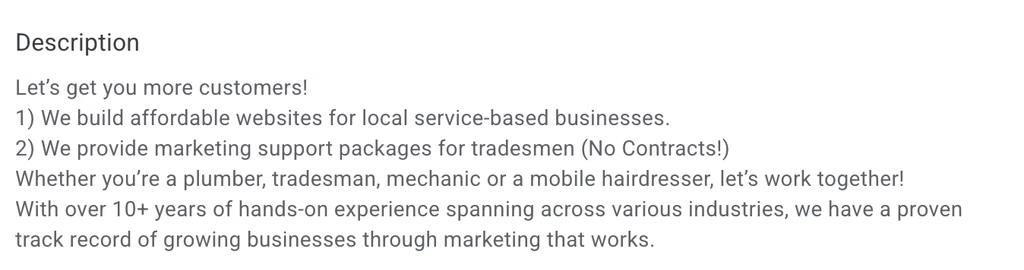
You get 750 characters. Use them to say what you build, where you work and what makes you different. Mention your main towns by name.
Services
List every service individually: extensions, loft conversions, renovations, new builds, driveways, whatever you offer. Each one helps you match more searches, and you can add descriptions to each.
Posts
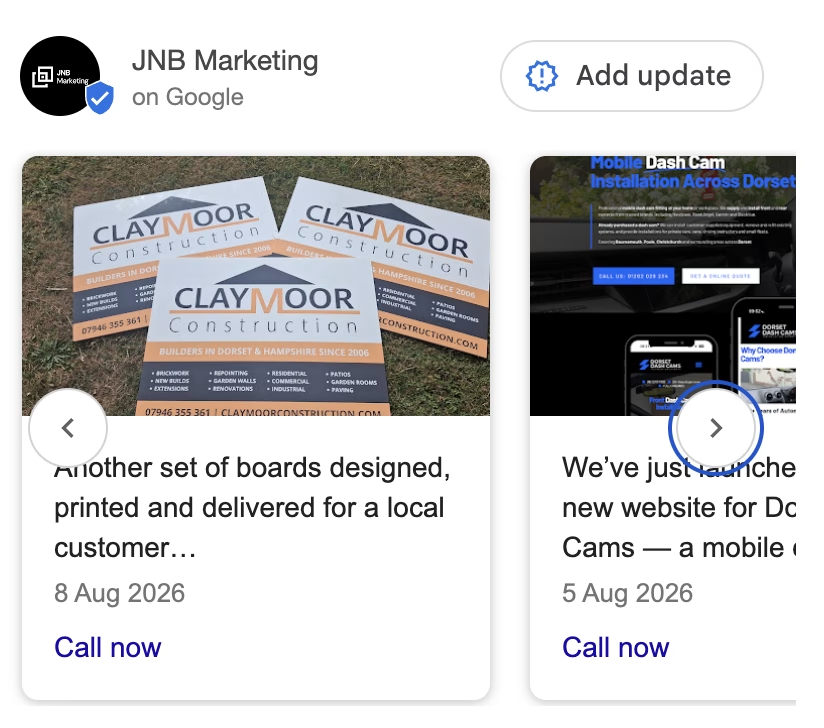
A short monthly post with a photo of a current project keeps your profile visibly active. It takes five minutes. Almost no construction companies bother, so the ones that do look noticeably more switched on.
Q&A
Add and answer the questions you get asked constantly. Do you handle planning applications? Are you insured? Do you do smaller jobs? You are allowed to post and answer these yourself, and it saves enquiries going cold while people wait for answers.
Keep Your Service Area Honest
Google lets you set the areas you cover. Resist the urge to draw a giant circle over three counties.
Ranking in local results gets harder the further you are from your base, so a tight, honest service area focused on where you actually want work performs better than a sprawling one. It also filters out the far away enquiries you would only turn down anyway.
Consistency With Your Website
Google cross checks your profile against your website. Same business name, same phone number, same address, same services. If your profile says one thing and your site says another, trust drops and so can your visibility. When you update one, update both. Simple discipline, easily forgotten.
Too Busy Running Sites to Run a Profile?
Keeping a profile properly maintained takes a little time every month, which is exactly why most construction companies do not do it, and exactly why it works so well for the ones that do.
At JNB Marketing we manage Google Business Profiles for construction and trades businesses across the UK, alongside websites and local SEO. Our clients send us photos from site over WhatsApp, and we handle the uploads, the posts, the review responses and the monthly upkeep. The profile stays active, the enquiries keep coming, and nobody on your team has to remember to do it.
If your profile has been gathering dust since you claimed it, get in touch. We will look it over, tell you honestly what is holding it back, and show you what it would take to turn it into a steady source of enquiries.
Google Business Profile FAQ for Construction Companies
Do I need a Google Business Profile if I already have a website?
Yes. The profile is what appears in Google Maps and local search results, which is where most local building enquiries start. Your website and profile do different jobs and work best together.
Should I use my home address if I work from home?
You can hide your address and operate as a service area business, which is the right setup for most builders. Your profile still appears in local results for the areas you set, without publishing your home address.
How many reviews does a construction company need?
There is no magic number, but you want more than your direct local competitors and you want recent ones. A profile where the newest review is two years old raises quiet doubts, even if the rating is five stars.
Can I stop competitors or fake reviews damaging my profile?
You can report fake reviews to Google, though removal is not guaranteed. The more effective defence is volume: a steady flow of genuine reviews dilutes anything unfair and shows an honest overall picture.