For most tradespeople, LinkedIn is usually the last social media platform they think about. It can feel overly corporate, full of buzzwords, and a world away from what actually happens on site.
But that is exactly why it is worth paying attention to.
While Facebook, Instagram and Google Business Profile are often better for generating local enquiries, LinkedIn gives trades businesses access to a different audience altogether. Contractors, developers, property managers, architects, suppliers and potential employees all use the platform every day.
You do not need to become an influencer or spend hours creating content to get value from LinkedIn.
In fact, some of the best-performing posts from trades businesses are often the simplest. Photos from completed projects, progress updates, training achievements and honest insights into the work you do can all help raise your profile with the people who matter most.
The key is understanding what LinkedIn is actually for.
Rather than chasing likes from everyone, LinkedIn helps you stay visible to the people who could bring commercial opportunities, recommend your business, offer partnerships or join your team. If you’re looking to win larger projects, strengthen your reputation or build relationships within your industry, it can be one of the most underused marketing tools available to trades businesses.
Why LinkedIn Matters for Builders, Plumbers and Local Service Businesses
LinkedIn is not always the best place to find emergency domestic work.
If someone needs a plumber tonight or a roofer after a storm, they are more likely to search on Google, check local Facebook groups or look at reviews.
Where LinkedIn becomes useful is when your business wants to be seen by people outside the usual homeowner audience.
For builders, plumbers, electricians, roofers, landscapers and other service-based businesses, LinkedIn can help you get in front of:
- Contractors
- Developers
- Property managers
- Facilities managers
- Commercial buyers
- Architects
- Suppliers
- Recruiters
- Potential employees
- Other local business owners
That makes it a strong platform for commercial work, subcontracting opportunities, recruitment and long-term business relationships.
It is also useful for credibility. If someone hears about your business and checks you out online, a well-kept LinkedIn profile can help back up what they have already seen on your website, Google Business Profile or social media pages.
You do not need thousands of followers for LinkedIn to work. You just need the right people to see enough of your work to trust that your business is active, professional and reliable.
| Business goal | Where LinkedIn helps | Where it is usually not your main channel |
| Winning commercial work | Showing completed projects, accreditations, team updates and company news | Emergency same-day homeowner leads |
| Hiring staff or apprentices | Making your business visible to candidates and recruiters | One-off quick quote requests |
| Building supplier and contractor relationships | Staying in front of industry contacts and decision-makers | Casual neighbourhood awareness |
| Strengthening business credibility | Giving your company and team a professional public presence | Pure entertainment content |
LinkedIn is not about trying to reach everyone. It is about being visible to the people who can recommend you, hire you, work with you or trust you with larger projects.
How to Set Up a LinkedIn Profile for a Trades Business
Your LinkedIn profile does not need to look corporate. It just needs to look professional, active and easy to understand.
For most tradespeople, that means keeping things simple. Use a clear photo of yourself, make it obvious what you do, and explain the type of work you’re looking to attract. If someone lands on your profile, they should be able to understand your trade, location and services within a few seconds.
A common mistake is using vague job titles such as “Director” or “Business Owner”. While technically correct, they tell people very little. A headline like “Builder in Dorset | Extensions, Renovations & Commercial Fit-Outs” or “Plumber in Bournemouth | Domestic & Commercial Plumbing & Heating” immediately gives people the information they are looking for.
Your About section does not need to be a life story. A short introduction covering your experience, service area and specialist work is usually enough. Think of it as a quick explanation of who you help and what you do best.
What Your LinkedIn Profile Should Include
| Profile Section | What to Include | Why It Matters |
| Profile Photo | A clear photo of yourself rather than a company logo | People connect with people first |
| Headline | Your trade, location and main services | Makes your profile instantly understandable |
| About Section | A short overview of your experience and services | Adds personality and credibility |
| Experience | Your business name, role and service summary | Shows your background and expertise |
| Featured Links | Website, quote form, case studies or contact page | Gives people a clear next step |
| Certifications & Qualifications | Gas Safe, NICEIC, CSCS, NVQs and manufacturer training | Reinforces trust and professionalism |
| Contact Details | Website, email, phone number or enquiry form | Makes it easier to generate leads |
LinkedIn offers profile verification, it is worth completing.
Verified profiles generally appear more trustworthy and can help reassure potential clients, suppliers, contractors and job candidates that they are dealing with a legitimate business.
If you also have a LinkedIn Company Page, make sure it matches your personal profile. Your branding, services, locations and contact details should be consistent across both. At JNB Marketing, we often see trades businesses lose credibility simply because their website, social media and LinkedIn profiles all describe the business differently. Keeping everything aligned creates a stronger and more professional online presence.
What Tradespeople Should Post on LinkedIn
One of the biggest misconceptions about LinkedIn is that you need to sound like a business consultant to get results.
You don’t.
In fact, the content that performs best for most trades businesses is usually the content they are already creating every day. Project photos, completed jobs, progress updates, team achievements and training milestones all give people a reason to trust your business.
Think about what a potential client, contractor or recruiter wants to see. They want proof that you’re active, professional and capable of delivering quality work. A simple project update often achieves that far better than a lengthy post filled with business jargon.
Content Ideas That Work Well for Trades on LinkedIn
| Post Type | What It Looks Like | Why It Works |
| Project Spotlight | Finished extension, rewire, bathroom installation, roof replacement or landscaping project | Demonstrates the quality of your work |
| Progress Update | Photos from site showing work underway | Shows consistency and professionalism |
| Before & After Post | The problem, the work completed and the final result | Easy for people to understand and remember |
| Training & Qualifications | New certifications, manufacturer training or industry accreditations | Builds trust and credibility |
| Team Updates | New employees, apprentices or staff milestones | Supports recruitment and company culture |
| Health & Safety Content | Site procedures, compliance updates or best practices | Positions your business as professional and reliable |
| Industry Insights | Advice on maintenance, planning, project timelines or common customer questions | Provides value and showcases expertise |
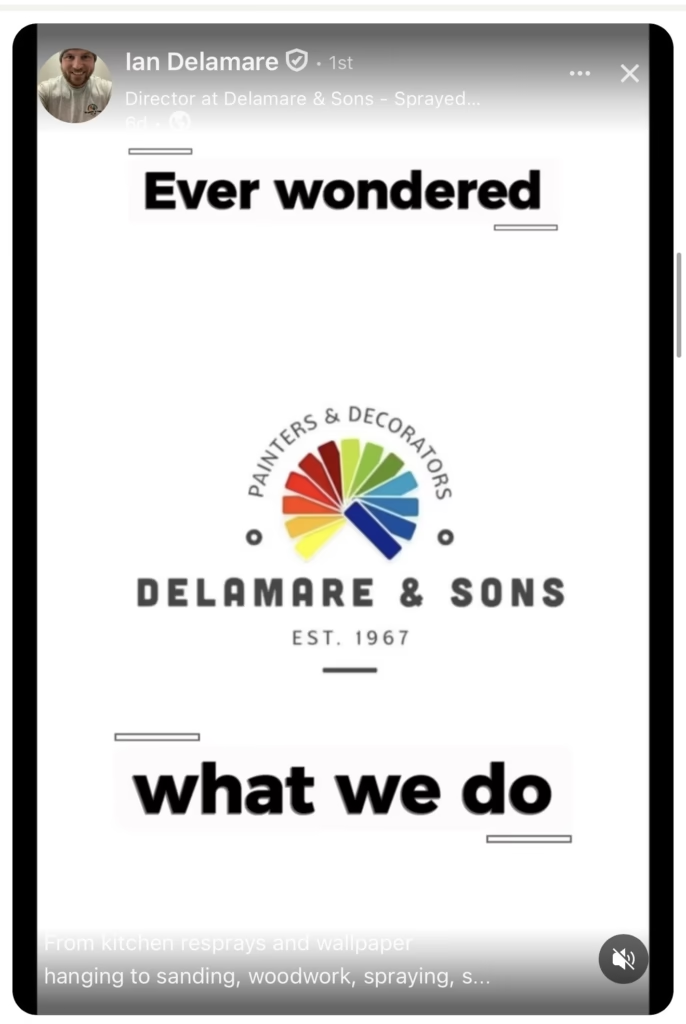
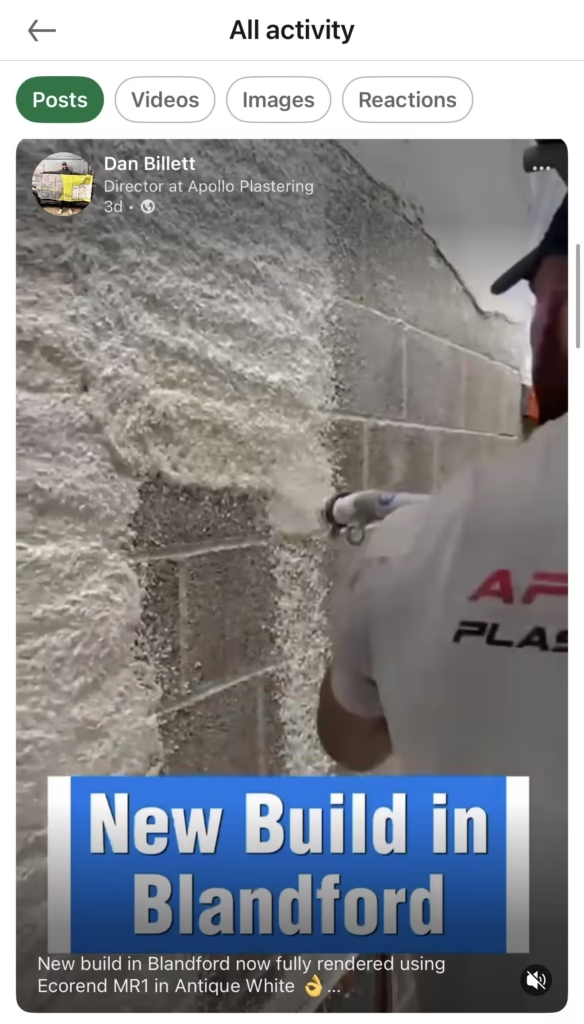
The best LinkedIn posts are often the simplest.
If you’ve just completed a project, explain what the customer needed, how you approached the work and share a few photos of the finished result. If you’ve completed new training or achieved an accreditation, explain what it means for your customers. If you’ve hired a new team member, introduce them and welcome them to the business.
You don’t need to turn every post into a motivational story or a business lesson.
At JNB Marketing, we often find that trades businesses get better engagement from straightforward project updates than they do from heavily scripted content. People want to see real work carried out by real businesses.
Most importantly, write how you normally speak.
LinkedIn is a professional platform, but that doesn’t mean every post needs to sound formal. A clear, honest explanation of the work you’ve completed will usually outperform content that sounds like it was copied from a marketing guru.
If you’re consistently sharing completed projects, company updates and useful industry insights, you’re already doing more than most of your competitors.
How LinkedIn Helps Builders and Plumbers Win Work, Recruit Staff and Build Credibility
One of LinkedIn’s biggest advantages is visibility.
When your profile is active and regularly updated, it becomes easier for potential clients, contractors, suppliers and employees to discover your business. Instead of relying entirely on outbound marketing, LinkedIn helps create opportunities by keeping your company visible to the right people.
This can be particularly valuable when recruiting. Before applying for a role, many candidates will look at a company’s online presence to get a feel for the business. An active LinkedIn profile that showcases your projects, team and company culture can make your business more attractive to potential employees and apprentices.
LinkedIn also helps strengthen your credibility. If a contractor, architect, supplier or facilities manager researches your company online, a professional LinkedIn presence provides another layer of trust alongside your website, reviews and Google Business Profile.
For trades businesses targeting commercial projects, referrals or subcontract opportunities, that extra credibility can make a real difference. It demonstrates that your business is active, established and engaged within the industry.
That said, LinkedIn should complement your wider marketing strategy, not replace it.
Your website, local SEO and Google Business Profile should still be doing much of the heavy lifting when it comes to generating enquiries. At JNB Marketing, we often see the strongest results when trades businesses combine a well-optimised website with an active presence on platforms like LinkedIn, helping them build both visibility and credibility online.
Used together, these channels create a stronger digital presence that supports lead generation, recruitment and long-term business growth.
A Simple LinkedIn Plan for Busy Tradespeople
Many trades businesses give up on LinkedIn because they think they need to post every day or spend hours creating content.
The reality is much simpler.
Consistency beats volume every time. A handful of updates each month is often enough to keep your profile active, showcase your work and stay visible to potential clients, contractors and employees.
If you’re short on time, start with a routine like this:
| Time Commitment | What to Do | Outcome |
| Once a week | Share a project update with a photo or short video | Keeps your profile active and showcases your work |
| Once a week | Comment on a supplier, client or industry contact’s post | Increases visibility without creating new content |
| Once a month | Review your profile, featured links and company information | Keeps your profile up to date |
| When something happens | Share training, accreditations, team updates or job vacancies | Builds trust and credibility |
| When a project finishes | Post a short case study or before-and-after update | Creates lasting proof of your work |
For most trades businesses, that’s enough.
You don’t need professional video equipment, daily posts or lengthy articles. A few photos from site, a short explanation of the work completed and a consistent presence will usually achieve far more than posting heavily for a week and then disappearing for months.
If you’re aiming to win commercial work, recruit staff or strengthen your reputation within the industry, staying visible matters. The businesses that regularly showcase their work often have an advantage over those that remain silent, even when the quality of work is similar.
The good news is that maintaining an active LinkedIn presence takes far less time than most people think.
Let JNB Marketing Handle LinkedIn and the Rest of Your Marketing
Let’s be honest.
Most tradespeople don’t have the time to keep Facebook, Instagram, LinkedIn, TikTok and Google Business Profile updated while also running jobs, quoting work, managing staff and dealing with customers.
That’s where JNB Marketing comes in.
We work with trades and service-based businesses across the UK, helping them generate more enquiries and build a stronger online presence through website design, local SEO, Google Business Profile management and social media marketing.
Whether you want more leads, better visibility on Google or a consistent presence across social media, we’ll build a marketing strategy around your business and the type of work you want to win.
The best part? You don’t need to spend hours creating content.
How it works
Many of our clients simply send us project photos and updates via WhatsApp, and we handle the rest. From creating content and managing social media accounts to improving your Google rankings and optimising your website, we take care of the marketing so you can focus on running your business.
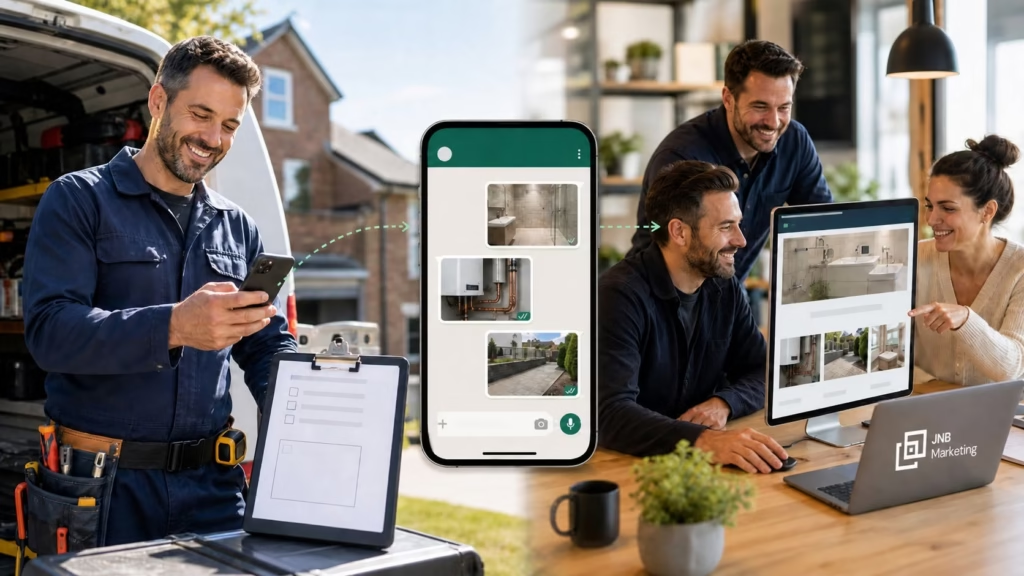
If you’re ready to spend less time worrying about marketing and more time growing your business, take a look at our Marketing Support Packages or explore our SEO Services to see how we can help.
LinkedIn for Trades FAQ
Is LinkedIn worth it for builders and construction companies?
Yes. While LinkedIn isn’t usually the best platform for generating emergency homeowner enquiries, it can be highly effective for commercial work, subcontracting opportunities, recruitment and building relationships with contractors, developers and other industry professionals. If you’re looking to grow your reputation and visibility within the construction industry, LinkedIn is well worth using.
Should plumbers use LinkedIn?
Absolutely, but with the right expectations. Most people won’t search LinkedIn when they need an emergency plumber, but it can be a great platform for showcasing larger projects, commercial contracts, accreditations and company updates. It works best alongside your website, Google Business Profile and SEO strategy rather than as a replacement for them.
What should tradespeople post on LinkedIn?
Focus on the work itself. Project photos, progress updates, before-and-after transformations, training achievements, certifications, team news and recruitment posts all perform well. The goal is to show potential clients, employees and industry contacts that your business is active, professional and producing quality work.
Do I need to post every day on LinkedIn?
No. For most trades businesses, one quality post per week is enough to maintain visibility. Consistency is more important than volume. Regular project updates and occasional engagement with other industry professionals can go a long way without taking up too much time.