First it was SEO. Now the marketing world talks about AEO, GEO, LLM optimisation and a dozen other acronyms. If you run a local trade business, it is easy to feel like you need to learn a new language just to get found online.
You do not. Strip away the jargon and the idea behind AEO is straightforward. Much of it builds on the work that already helps customers find and understand your business.
Here is what AEO and SEO mean, how they differ and which steps deserve your attention.
What Is SEO?
SEO stands for search engine optimisation. It means improving your website and online presence so customers can find you through search engines.
For local trades, that includes your service pages, location information, Google Business Profile, reviews and business listings. The aim is to appear for relevant searches such as “roofer Poole” or “electrician near me”, then turn that visibility into enquiries.
Good SEO also makes your website useful once someone arrives. Customers should quickly understand what you do, where you work and how to contact you.
What Is AEO?
AEO stands for answer engine optimisation. It means presenting information clearly so tools that provide direct answers can find, understand and potentially use it.
That can include answers in ChatGPT, Perplexity, Google’s AI features and some voice search experiences. Depending on the question and tool, the result might be an explanation, a cited source or a shortlist of businesses.
For a local business, the goal is to make accurate information about your services available when someone asks for help. There is no setting that guarantees your business will appear.
AEO vs SEO: Side by Side
| Comparison | SEO | AEO |
|---|---|---|
| Main goal | Appear in relevant search results | Be mentioned, cited or used in direct answers |
| Where it appears | Search results and local listings such as the Map Pack | AI answers, answer boxes and some voice search results |
| What customers see | Links, business listings and search features | A direct response, often with sources or recommendations |
| Main focus | Discoverable pages, relevant content and a strong online presence | Accessible information, clear answers and accurate business facts |
| Useful content | Helpful service pages and genuine local information | The same content, with direct answers to customer questions |
| How to measure it | Relevant traffic, calls, enquiries and booked work | Mentions, citations, referral visits and enquiries |
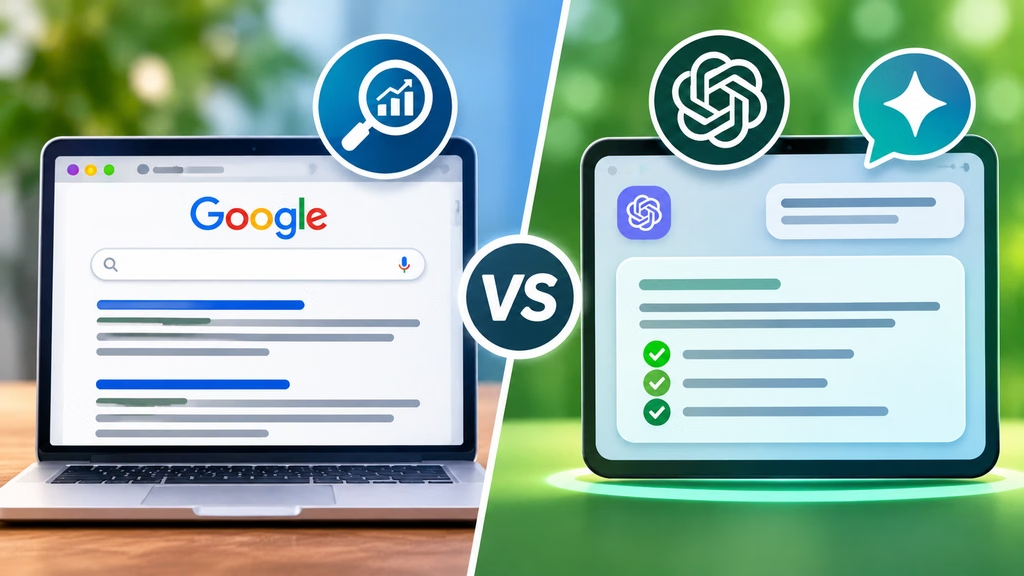
The distinction is useful, but the work overlaps. A clear service page can help someone searching on Google and someone asking an AI tool the same question.
Where They Overlap
AEO does not remove the need for SEO. Search engines and AI search tools can both discover information from your website and other public sources.
Useful service pages, accurate contact details, genuine reviews and relevant mentions give customers more information to assess your business. They also make your services and coverage easier to understand.
The overlap does not mean every tool uses the same sources or ranking signals. It means you can improve the foundations without building two completely separate strategies.
What AEO Adds for Local Businesses
AEO puts extra emphasis on making answers easy to find and understand. These changes can improve your pages for customers too.
Answer questions directly
Add the questions customers ask about prices, availability, coverage and how your service works. Give the answer first, then explain any conditions. If you publish prices, use your actual figures and state what they include.
Write in plain English
Explain the work using familiar terms. Technical detail helps when it answers a customer’s question, but jargon should not hide the information they need.
Show real, original detail
Include completed jobs, your own photos, local knowledge and explanations of your process. Specific examples give customers something useful beyond claims such as “quality service”.
Keep facts accurate
Check your phone number, opening hours, services and coverage across your website and business listings. Correct outdated information that could cause confusion.
Build your presence beyond your website
Relevant trade directories, supplier listings, customer reviews and genuine local coverage provide additional sources of information about your business.
What Should a Local Business Do Now?
Start with improvements that help customers wherever they find you:
- Create a useful page for each main service.
- Explain your coverage and add distinct location pages where they provide value.
- Answer common customer questions clearly.
- Complete your Google Business Profile and keep its details current.
- Ask customers for honest reviews after completed work.
- Correct outdated business details across your listings.
- Check your presence on Bing Places and Apple Maps.
- Make sure relevant search crawlers can access your public website pages.
- Review what Google, ChatGPT and Perplexity show for typical customer questions.
Prioritise missing information and contact problems first. There is little value in attracting more attention if customers cannot tell whether you cover their area or find a working phone number.
How to Check Your Visibility
Search for your services in the towns you cover. Then ask AI tools questions such as “Who repairs boilers in Poole?” or “What should I look for when hiring a roofer in Bournemouth?”
Record which businesses appear and which sources are cited. Check whether your own information is accurate and whether useful sources are missing your business.
Treat each result as a snapshot. Answers can change with the question, location, tool and timing, so one test does not establish a fixed position.
Ask new customers how they found you as well. Calls, suitable enquiries and booked jobs help you judge whether your online presence is bringing in work.
Beware the AEO Hype
Be cautious of anyone promising guaranteed AI recommendations or a secret shortcut. You cannot control every answer a search or AI tool produces.
You can control the quality of your information, the usefulness of your website and how accurately your business appears elsewhere. Ask providers to explain the changes they will make and how they will measure results.
Clear deliverables are more useful than a package filled with unfamiliar acronyms.
Want Both Covered Without the Jargon?
Most business owners want customers to find them and understand why they are suitable for the job.
At JNB Marketing, we build websites and provide local SEO for trades across Bournemouth, Poole, Dorset and the UK. Our work includes clear service pages, accurate listings and useful local content that supports visibility across search and AI tools.
Get in touch to discuss how your business currently appears online and which improvements should come first.
AEO vs SEO FAQ
Is AEO replacing SEO?
No. Search results remain a way for customers to find businesses. AEO adds a focus on direct answers, while many of the underlying improvements overlap with SEO.
Do I need to pay for AEO separately?
It depends on what your existing service includes. Ask which specific tasks are covered, such as content improvements, crawler checks and visibility monitoring, before paying for additional work.
What is the difference between AEO and GEO?
AEO generally focuses on visibility in direct answers. GEO, or generative engine optimisation, focuses more specifically on responses produced by generative AI tools. The terms overlap, and providers may use them differently.
How do I know if AEO is working?
Track whether your business is mentioned or cited for relevant questions, whether AI tools send visitors to your website and whether customers mention them when enquiring. Compare results over time rather than relying on a single answer.