At JNB Marketing, we often hear the question: “Why does SEO take so long to work?” It’s a common frustration – you’ve launched a new website or optimised your existing one, but weeks go by with little to no movement in Google rankings.
The truth is, Search Engine Optimisation (SEO) is a long-term strategy, influenced by how search algorithms operate and the competitive landscape online.
In this comprehensive guide, we’ll explain the reasons behind SEO’s slow burn, delve into Google’s algorithm (and how it’s evolved since the early internet), compare SEO for Google vs. Bing, and address specific questions like why it can take ~30 days to index a site and how long until you see results.
We’ll also discuss whether factors like backlinks, citations, social media posts, and Google reviews can speed up the process. (Tip: For a primer on SEO basics and why it matters for tradesmen, see our SEO for Tradesmen page, which covers “what is SEO” and more.)
Let’s break down the factors that make SEO a marathon, not a sprint – and what you can do to accelerate your progress.
Understanding Google’s Algorithm and Ranking Factors
To grasp why SEO results aren’t instantaneous, you must first understand how Google’s search algorithm works. Google’s algorithm is essentially a complex set of ranking factors and rules that determine which web pages show up for any given search query. It considers hundreds of signals – from the keywords on your page to the quality of sites that link to you – all with the goal of delivering the most relevant and high-quality results to users.
Google keeps its exact algorithm secret and continuously updates it.
In fact, Google made 4,725 changes to Search in 2022, averaging about 13 changes per day. Most of these changes are minor tweaks, but some are major “core” updates that significantly shuffle rankings. The frequent updates mean SEO is never a one-and-done effort; even after you optimise, the algorithm may change, requiring ongoing adjustments.
Google’s ultimate aim is to reward pages that provide helpful, trustworthy, and relevant content to users, while filtering out spam or low-value content.
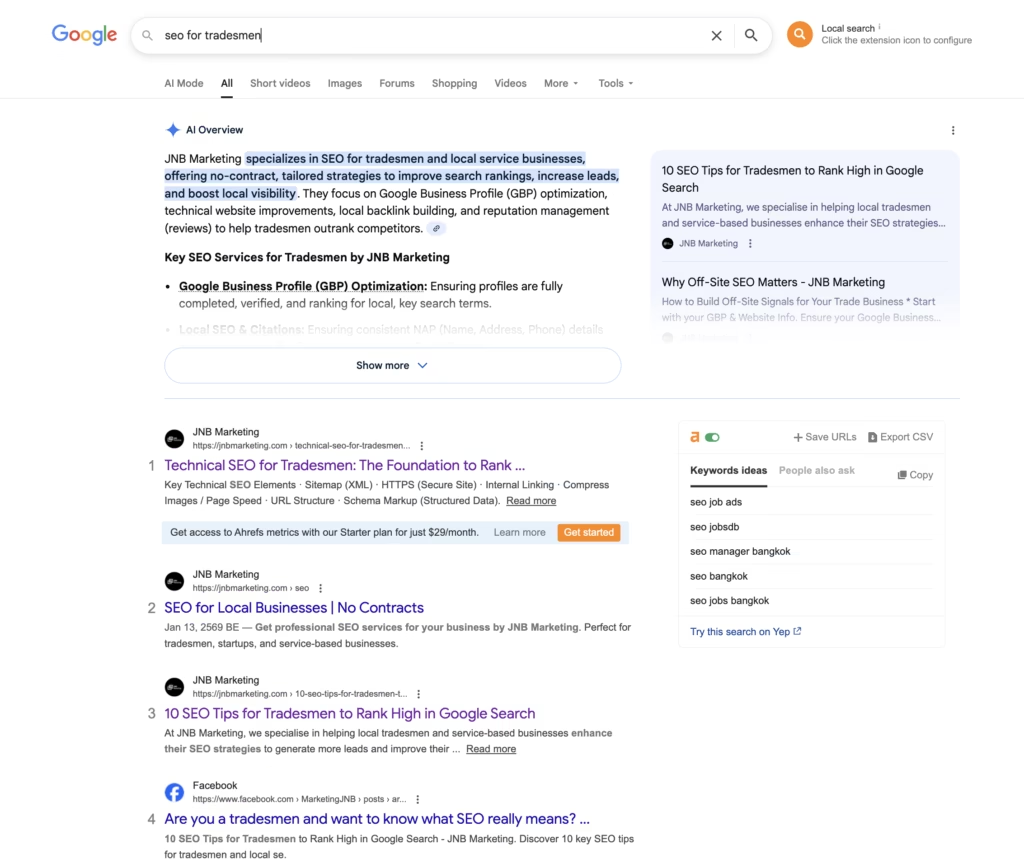
What is Google’s algorithm looking for? Broadly, a few key elements carry a lot of weight:
Relevance:
Does your content match the searcher’s intent and keywords? Google has gotten very good at understanding context and synonyms. Since the Hummingbird (2013) update and later RankBrain and BERT, Google’s algorithm understands natural language and user intent far beyond exact keyword matching. This means creating content that comprehensively answers the query is more important than simply repeating keywords.
Quality & Authority:
Google gauges quality in part by your site’s authority, which often comes from backlinks (other sites linking to you) and your content’s depth. Not all backlinks are equal; a link from a reputable, relevant site is far more valuable than many links from low-quality sites. Tactics that try to cheat this (like buying links or keyword-stuffing pages) are actively penalised by Google’s algorithm. Google also evaluates E-E-A-T (Experience, Expertise, Authoritativeness, Trustworthiness) especially for content in areas like health, finance, or other “Your Money or Your Life” topics.
Technical Health & User Experience:
The algorithm favours websites that are technically sound – meaning they load fast, are mobile-friendly, secure (HTTPS), and easy for Googlebot to crawl. If your site has crawling errors, slow speeds, or poor mobile usability, it can hurt your rankings. (For tradesmen and local businesses, a well-built website is crucial – see our Website page for how we ensure sites are fast and SEO-friendly.)
User Behavior Signals:
While debated, there’s evidence Google considers signals like click-through rates and dwell time (how long users stay on your page) as indicators of satisfaction. High bounce rates might signal that your page didn’t give users what they wanted.
All these factors don’t instantly coalesce to boost your ranking. Google takes time to discover your changes (through crawling and indexing) and to evaluate your site against others. It essentially needs to trust your site as a quality result, and that trust is earned gradually, not instantly. Next, we’ll look at how Google’s algorithm has changed over time – which will further illustrate why SEO is a slow process.
A Brief History of Google’s Algorithm (and Why It Matters)
Google’s search algorithm has continuously evolved since the late 1990s, becoming more sophisticated in combating spam and rewarding quality. Understanding this history highlights why SEO efforts require patience – strategies that worked overnight 20 years ago (like stuffing pages with keywords or getting any links possible) are now obsolete or even harmful, due to algorithm updates. Below is a brief timeline of major Google algorithm updates and their impact on SEO:
| Year | Algorithm Update | Impact on SEO |
|---|---|---|
| 1998 | Google launch & PageRank | Google’s founding algorithm used backlinks as a key ranking signal, a revolutionary approach that made link building crucial. |
| 2003 | Florida Update | First major crackdown on spam tactics. Many sites using keyword stuffing or hidden text were hit, shifting SEO toward cleaner tactics. |
| 2011 | Panda | Targeted low-quality or “thin” content, lowering the rankings of sites with lots of duplicate or poorly written content. This was a wake-up call to focus on quality content over quantity. |
| 2012 | Penguin | Targeted manipulative link schemes. Websites with unnatural or paid backlink profiles were penalized to reduce link spam. It prioritized genuine, earned backlinks. |
| 2013 | Hummingbird | Core algorithm overhaul to better understand semantic search and user intent. Rather than matching exact keywords, Google began interpreting the meaning behind queries, improving results for natural language searches. |
| 2015 | RankBrain (ML integration) | Google started using machine-learning algorithms to process search queries, further improving its understanding of unfamiliar or long-tail queries. Content relevance was assessed more intelligently. |
| 2018 | “Medic” Core Update | A broad core update (nicknamed Medic) that particularly impacted YMYL sites, emphasizing the importance of authority and trust (E-A-T). It highlighted the need for expertise in content. |
| 2019 | BERT | Introduced advanced natural language processing to Google’s algorithm. BERT enables Google to grasp the context of words in queries, improving understanding of longer, conversational searches and prepositions (for example, distinguishing “to” vs “for” in intent). |
| 2021 | Core Web Vitals Update | Page Experience became a ranking factor, focusing on user experience metrics like page load speed, interactivity, and layout stability. Fast, user-friendly websites gained an edge. |
| 2022 | Helpful Content Update | Google explicitly started targeting content written “for SEO” rather than for people. This update demoted sites with lots of unhelpful, clickbait, or AI-generated content created just to rank, and rewarded people-first content. Quality and originality became even more critical. |
| 2023–2025+ | Continuous Core Updates & AI | Google now rolls out core updates multiple times a year, and is experimenting with AI in search (e.g. generative AI answers). The algorithm’s fundamentals remain: high-quality, relevant content and natural backlinks win in the long run. Google’s own data shows thousands of search changes per year, keeping SEOs on their toes. |
Why does this history lesson matter? Because it shows that SEO is a moving target. Tactics that produce quick results (like spammy links) invariably get punished by the next update. Google’s long-term trend is clear: it rewards earned credibility and value, not shortcuts. That’s why building up your site’s content and reputation takes time – you’re essentially playing a long game aligned with Google’s evolving standards. It’s better to think of SEO as ongoing “online PR” for your business rather than a one-time hack.
(For more on how we stay on top of these changes for local businesses, see our Marketing Support page – our support packages ensure your SEO and marketing adapt continuously.)
Google vs. Bing – SEO Differences to Know
Google may be the dominant search engine (over 90% market share globally), but it’s not the only player. Microsoft’s Bing (which also powers Yahoo search) handles a smaller yet significant share of searches, and it has its own algorithm nuances. If you’ve noticed your site ranks differently on Bing vs Google, it’s not your imagination – the two search engines value slightly different things.
| Factor | Google SEO | Bing SEO |
|---|---|---|
| Market Share & Audience | Over 90% of global searches. Large mobile and international user base. Google’s algorithm is advanced in AI and context understanding. | Roughly 3–5% of global searches, with higher usage on desktop. Bing’s audience skews slightly older and is often tied to Microsoft products. |
| Keywords & Content | Google understands context and synonyms through semantic search. High-quality, natural content performs best. Keyword stuffing can lead to penalties. | Bing favours exact-match keywords in titles, meta tags, and domains. Even meta keywords (ignored by Google) still play a small role in Bing’s rankings. |
| Backlinks | Google prioritises quality over quantity. Authoritative backlinks matter most. Spammy or paid link schemes are penalised. | Bing values backlinks but is slightly more lenient. It prefers fewer high-quality links, and may tolerate some paid links if not manipulative. |
| Social Signals | Google states that social metrics (likes, shares) are not direct ranking factors, though they can help indirectly. | Bing does factor in social signals. Strong engagement on platforms like Facebook or Twitter can positively influence rankings. |
| Technical & UX Factors | Google places strong emphasis on Core Web Vitals (speed, responsiveness) and mobile-first indexing. It handles JavaScript and complex content better. | Bing supports IndexNow for faster indexing. It prioritises well-written meta data and clean structure. Mobile-friendliness matters, though adoption was slower. |
In summary, Google’s algorithm is more AI-driven and context-aware, while Bing’s is a bit more old-school SEO (exact keywords, traditional ranking signals).
That said, the core best practices overlap: create quality content, earn good backlinks, and ensure a crawlable site. You don’t need two completely separate SEO strategies, but it’s wise to be aware of the differences. Notably, if you maintain an active social media presence and get a lot of brand mentions, you might see relatively better performance on Bing.
Conversely, Google might reward the site that better satisfies the search intent even if the keyword isn’t an exact match on the page.
(Curious about driving results on both Google and Bing? Our Marketing Support packages cover holistic SEO and content strategy across platforms.)
Crawling & Indexing: Why Your Site Might Take 30+ Days to Appear
One specific pain point is the initial indexing of your website. You may have heard that “it takes 30 days to index a website” – sometimes it’s quicker, sometimes slower, but it often feels like forever when your site is new. Here’s why:
Indexing is the process by which Google (or Bing) discovers your pages and adds them to its vast index so they can be shown in search results. Before indexing comes crawling – Google’s bots have to find a link to your page or be directly notified of it. For established sites, Googlebot crawls frequently, but a brand-new site with no backlinks is like a needle in a haystack. Even after you submit your URL to Google (via Search Console or an XML sitemap), there’s no guarantee on how fast Google will index it. Google’s own support docs state clearly: “Crawling and indexing are processes which can take some time and rely on many factors. We cannot make predictions or guarantees about when or if your URLs will be indexed.” In fact, Google points out the most common reason a site isn’t indexed yet is simply because it’s new – “be patient” (and request indexing).
On average, indexing a new webpage can take anywhere from a few days to a few weeks. Some sources note it can be as quick as 4 days or as long as 4-6 weeks, with outliers up to 3-6 months for very new domains with little prominence. Several factors influence this:
Site popularity & links:
If your site gets a mention (and link) from an already indexed, frequently crawled site (like a news article or a directory), Google will find you faster. Without inbound links, you’re relying on manually submitting to Google.
Crawlability:
Ensure your site isn’t accidentally blocking crawlers (no rogue noindex tags or disallow in robots.txt for important pages). A well-structured site with internal links helps Google navigate and find all pages. Use Google Search Console’s URL Inspection to request indexing of key pages – this often speeds things up.
Content uniqueness:
If your new site has largely duplicate or boilerplate content, Google may delay indexing or index only partially, as it prefers unique content. Make sure each page has distinct, valuable info.
Technical issues:
Check for crawl errors in Search Console. If Googlebot tried to crawl your site when it was down or too slow, it might not have succeeded in indexing. Fixing server errors or performance issues can remove such roadblocks.
It’s also worth noting that Bing’s IndexNow (if configured) can help instantly notify Bing of new pages, often getting them indexed quicker on Bing. Google is experimenting with similar concepts, but it largely still relies on its own crawling schedule.
Bottom line: It’s normal for a new website (or a newly added page) to take a few weeks before it shows up in Google’s index. Use that time wisely – continue improving the site, add quality content, and build a few initial links or listings (for example, getting your business listed on local directories can create backlinks that lead Google to your site). And yes, patience is key in these early stages. As Google itself emphasizes, sometimes you simply have to wait until the crawlers do their thing.
(Need a hand ensuring your site is index-friendly? Our team at JNB Marketing can audit your site’s technical SEO – see our Website services for how we build and fix sites to be Google-friendly.)
How Long Until You See SEO Results?
This is the million-dollar question for anyone investing in SEO: “How long until I start to see results?” The truthful (if slightly unsatisfying) answer is: it depends. SEO is influenced by countless variables – your industry’s competition level, how much SEO work has already been done, the keywords you target, and even factors like seasonality. However, we can give some general benchmarks backed by industry experience:
In the First Month or Two:
You may see little to no movement in rankings initially. This period is often about laying the groundwork (technical fixes, content creation, setting up analytics). If your site is new, the early wins might be simply getting indexed and appearing for your brand name or very niche searches. Occasionally, some pages might pop sooner (especially if targeting very low-competition keywords or if you get a high-value backlink early on), but don’t panic if you’re not on page 1 yet. Early indications of progress can include a gradual increase in impressions (your pages showing up somewhere in search results) even if clicks are few.
3 to 6 Months:
Typically, 3-6 months is the window when “noticeable” results kick in for a well-executed SEO strategy. By around month 3 or 4, you should hopefully see some keywords moving up into the top 50 or top 20, and maybe a trickle of organic traffic on long-tail searches. By month 6, many businesses see meaningful improvements – perhaps some priority keywords ranking on page 2 or bottom of page 1, and a steady uptick in organic leads. A recent analysis puts it succinctly: “Most websites see early signals within the first month, but meaningful SEO results usually take 3–6 months”. This presumes you’re consistently working on SEO during that time (publishing content, optimizing pages, building links, etc.).
6 to 12+ Months:
If you keep at it, months 6-12 often bring significant growth. Many competitive keywords might reach page 1 by the one-year mark, and your site will have built up considerably more authority (especially if you’ve earned quality backlinks along the way). In competitive niches, it can take up to a year or more to secure stable, top rankings. By this time, your traffic from SEO could be substantial and even outpacing paid ads if all has gone well. It’s also around the 12-month point that SEO efforts often start to compound – as your site gains trust, new content you publish can rank faster than when you started, creating a snowball effect.
It’s important to set the right expectation: SEO is a long-term investment, not a quick fix.
One contributor on an SEO forum summed it up well as a “rough rule of thumb” for a new site: 0-3 months = indexing & small movements; 3-6 months = some long-tail traffic if things are working; 6-12 months = more meaningful traffic and conversions. Of course, this assumes you’re following best practices. If nothing has budged after 6 months, it may be time to audit what might be wrong (perhaps the strategy missed the mark or technical issues are holding you back).
The good news is that when SEO does kick in, it can deliver some of the highest quality leads (people actively searching for your services). And unlike paid ads, the traffic doesn’t stop the moment you stop paying – the effects of SEO are longer-lasting. Many of our Marketing Support clients (tradesmen and local businesses) start seeing solid lead flow by the 6-month point and then enjoy years of returns as they keep building on that foundation.
Now that we’ve covered why SEO naturally takes time, let’s address the flip side: Are there ways to speed up the process? In the next section, we’ll explore how certain actions – from building citations and backlinks to leveraging social media and reviews – can potentially accelerate your SEO progress.
How to Speed Up Your SEO Success (What Actually Helps)
No one wants to wait forever for results. While there’s no magic button to leap to the top of Google overnight (anyone promising that is selling snake oil), there are smart ways to accelerate your SEO gains. Think of these as giving your website a push in the right direction so Google can recognize its value sooner. Here are some proven tactics:
Backlinks and Citations – Building Trust & Authority Faster
Backlinks (links from other websites to yours) remain one of the most powerful ranking factors. Earning high-quality backlinks can significantly speed up your rise in search rankings because they serve as “votes of confidence” in your site’s content. When Google sees reputable sites linking to you, it boosts your site’s authority, and that can translate into higher rankings more quickly than if you had no such signals. In fact, gaining just a few strong backlinks early on can sometimes jump-start a new site’s SEO in a matter of weeks rather than months.
Not all links are equal, though. Focus on quality and relevance: a mention on a respected industry blog, a local news article, or a supplier/partner’s site can carry weight. Even links from local directories or chambers of commerce websites help establish your legitimacy. (For example, if you’re a plumber in Dorset, getting listed on a local trades directory or a home improvement blog can be valuable.)
Closely related are citations – online mentions of your business name, address, and phone (NAP) on sites like Yelp, Yellow Pages, or Google Business Profile. Citations are crucial for local SEO. They build trust with search engines by consistently proving your business’s existence and location across the web. The more consistent citations you have on reputable platforms, the more confidence Google has in your legitimacy and geographic relevance. Consistency is key: make sure your NAP details are identical everywhere. Citations won’t directly boost your organic rankings for general keywords, but they heavily influence local pack rankings (the map results) and can indirectly boost your site’s authority. Google’s official guidance confirms that “review count and score are factored into local search ranking,” and by the same token, a high volume of accurate citations signals prominence. In practice, we’ve seen that a strong citation profile, combined with good reviews (covered below), can land a business in the coveted 3-pack of local results sooner.
So, will backlinks and citations speed up SEO? Yes – in a big way. They are among the most effective “accelerators” for SEO results. Earning a few great backlinks can sometimes achieve in one month what content tweaks alone might take several months to do. Similarly, building your citation presence early can put you on Google’s radar for local searches quickly. Just be sure these links and mentions are obtained naturally – don’t spam forums or buy hundreds of low-quality directory links, as that can backfire. A deliberate outreach and local PR effort, however, is well worth the time. (This is something we prioritize in our campaigns – securing press mentions, guest posts, and local directory listings as early wins.)
Social Media Activity – Indirect but Useful for SEO
Many clients ask if posting regularly on social media will help their SEO. The direct answer: social media signals do not directly influence Google rankings. In other words, Google isn’t ranking your website higher just because your Facebook post got 100 likes. However, that’s not the end of the story. Indirectly, social media can aid your SEO efforts:
Faster Indexing & Discovery:
Sharing new content (like a blog post) on your social channels can help get it in front of humans who might share or link to it, and even in front of search engine bots. Google does crawl some social sites. For instance, Twitter is often crawled rapidly – if your tweet with a link to your new page gets traction, Google may find that page sooner. (Bing, as mentioned, does factor social popularity into rankings, so a piece that’s viral on social might actually rank higher on Bing’s results.)
Traffic and Engagement:
Social posts that drive visitors to your site can indirectly improve SEO signals. If those visitors stay and engage with your content, it could lead to better user behavior metrics (longer time on site, lower bounce rate), which some believe can positively affect rankings. More importantly, those visitors might convert into customers or at least become aware of your brand – building brand searches and repeat visitors, which does correlate with better SEO over time.
Backlink opportunities:
This is the big one. Social media can amplify your content to the right people who may link to it. For example, you write a helpful “10 Tips for Improving Home Insulation” article on your site and share it on Facebook or LinkedIn. A local real estate blogger sees it and links it in their “energy-saving tips” roundup – you just earned a backlink thanks to social sharing. Over time, these backlinks signal to Google that your content is valuable, thereby boosting your rankings.
So while posting daily on Facebook or Instagram by itself isn’t a ranking factor for Google, it’s still beneficial. Think of social media as a distribution channel for your content. The more (relevant) eyes you get on your website content, the higher the chance someone will mention or link to it. Plus, an active social presence builds brand credibility – potential customers might trust you more, which can lead to higher click-through rates on search results if they recognize your name. One SEO specialist on a forum summarized: “Social media posting doesn’t directly boost Google ranking, but it helps indirectly. Consistent posting boosts brand visibility and drives traffic to your site, which are positive signals for SEO.” – we wholeheartedly agree with that assessment.
Tip: Focus on the platforms where your target audience hangs out. For tradesmen, Facebook community groups, Nextdoor, or LinkedIn (for B2B connections) might be fruitful. Share useful, locally relevant content – not just promotions. Over time, you’ll build a following that can amplify your reach. Just remember to tie it back to your site (occasionally share links to your blog or service pages where appropriate).
Google Reviews & Local Engagement – Boosting Local SEO Prominence
If you’re a local service business (which most tradesmen are), Google Reviews (reviews on your Google Business Profile) are a huge factor in how quickly and prominently you appear in local searches. While reviews don’t change your website’s organic ranking for, say, a general query on Google.com, they directly impact your visibility in Google’s Map Pack and local results. Google’s algorithm for local search has three main components: Relevance, Distance, and Prominence. Reviews fall under Prominence – essentially, how reputable and well-regarded your business is.
According to Google: “Google review count and score are factored into local search ranking. More reviews and positive ratings will probably improve a business’s local ranking.” This means that if you accumulate a lot of good reviews, you’re more likely to show up in that 3-pack of map results sooner and more often. We’ve seen this with our clients: a business with zero reviews often struggles to get into the local pack even if their website SEO is decent. But once they get, say, 10+ reviews with a strong average rating, Google’s trust in them increases, and they start appearing for local “[service] near me” searches more frequently.
Reviews also have indirect SEO benefits:
- They provide fresh user-generated content about your business (sometimes even mentioning your services by name, which can help Google associate your business with those keywords).
- A stream of new reviews indicates an active, legitimate business – something Google’s algorithms (and users) favor.
- High-rated businesses likely get more clicks from searchers, which could further signal to Google that people prefer your business.
Does this speed up SEO? From a local SEO perspective, absolutely yes. It’s one of the fastest ways to improve local visibility. A month of proactively gathering Google reviews (for example, asking happy customers to drop a review) can do wonders. It’s not going to make your website rank #1 for a broad search overnight, but if someone in your town searches for a tradesman in your category, a high review count and rating could push you ahead of a competitor. Essentially, good reviews can be the difference-maker in competitive local markets – sometimes even outweighing minor differences in website SEO.
It’s worth noting: Yelp or other third-party reviews don’t directly impact Google’s ranking, but they contribute to your overall online reputation. And Bing’s local results also consider Facebook and Yelp reviews. So encouraging reviews across platforms is ideal, but if you prioritize, Google reviews should come first.
(Need help setting up or optimizing your Google Business Profile? That’s included in our Marketing Support – ensuring your online reviews and local listings are working to bring you business.)
Other Tips to Accelerate SEO Results
In addition to the above big three, here are a few more tips to potentially speed up your SEO gains:
Publish Fresh Content Regularly: Websites that add quality content consistently (like a blog post every week or two) tend to get crawled more frequently and build topical authority faster. Each new page is a new opportunity to rank. Over a few months, a regularly updated site can outperform a static one. (Just make sure the content is useful and relevant to your audience, not filler.)
Optimise Internal Linking: Don’t underestimate your site’s internal links. Link new pages from your homepage or other high-traffic pages so Google discovers them quickly. Use descriptive anchor text. A strong internal link structure helps distribute any “link equity” faster across your site.
Fix Technical Issues Early: If your site has technical SEO problems (broken links, missing meta tags, slow loading pages), fix them as soon as possible. Removing these roadblocks can lead to quicker improvements once content and links are in place. For instance, improving your page speed or mobile usability can sometimes give a modest ranking boost after the next algorithm crawl of your site.
Leverage Search Console Data: Use Google Search Console regularly. If some pages aren’t indexed, request indexing. If you see crawl errors or coverage issues, address them. Sometimes simply fixing an indexing issue can make a page start ranking the next week.
Consider Bing and Others: While Google is king, don’t ignore Bing – submit your site to Bing Webmaster Tools as well. Since Bing also powers voice search for Alexa and some parts of Yahoo, a quick win on Bing can get you some traffic while Google progress is slower. Bing’s IndexNow (as mentioned) can be implemented to ensure immediate notification of new content to Bing.
Paid Search as a Stopgap: This isn’t an SEO tactic per se, but if you need visibility now, consider running some Google Ads while your SEO is ramping up. It can get you in front of customers and even give you insights on which keywords convert, which can inform your SEO focus. We’ve found that doing PPC in the interim can soften the wait for SEO and provide useful data – and no, running ads does not directly help your organic rankings, but it can increase overall traffic and conversions while you build your organic presence.
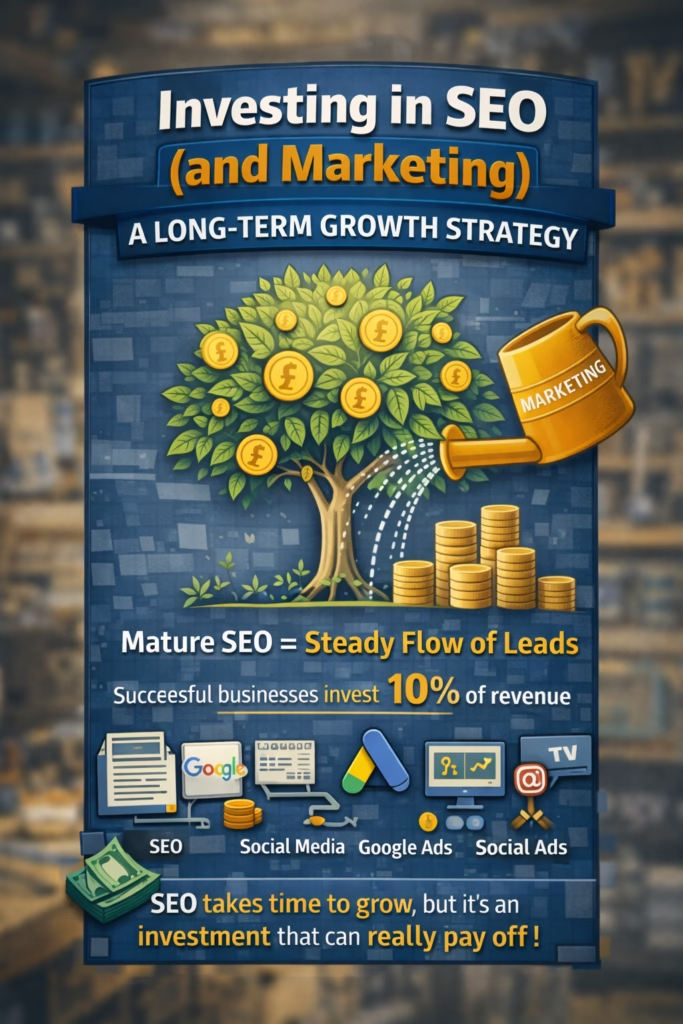
Lastly, maintain perspective: SEO results compound over time. The first 3-6 months are usually the slowest; gains often accelerate after that as your site establishes itself. As one SEO expert put it: SEO is like planting a tree – “The best time to plant was years ago; the second best time is now.” Every day you invest in SEO is like watering that tree. It may grow slowly at first, but eventually, you’ll have a sturdy, fruit-bearing asset for your business.
At JNB Marketing, we’re here to guide you through that journey. Whether it’s optimising your website (see our Website design page for SEO-friendly sites), providing ongoing SEO and content help (our Marketing Support packages), or specialising in local SEO for tradesmen (SEO for Tradesmen page), we’ve got you covered. SEO might be a marathon, but with the right strategy and consistent effort, you will get where you want to go – and we’ll jog alongside you every mile of the way.