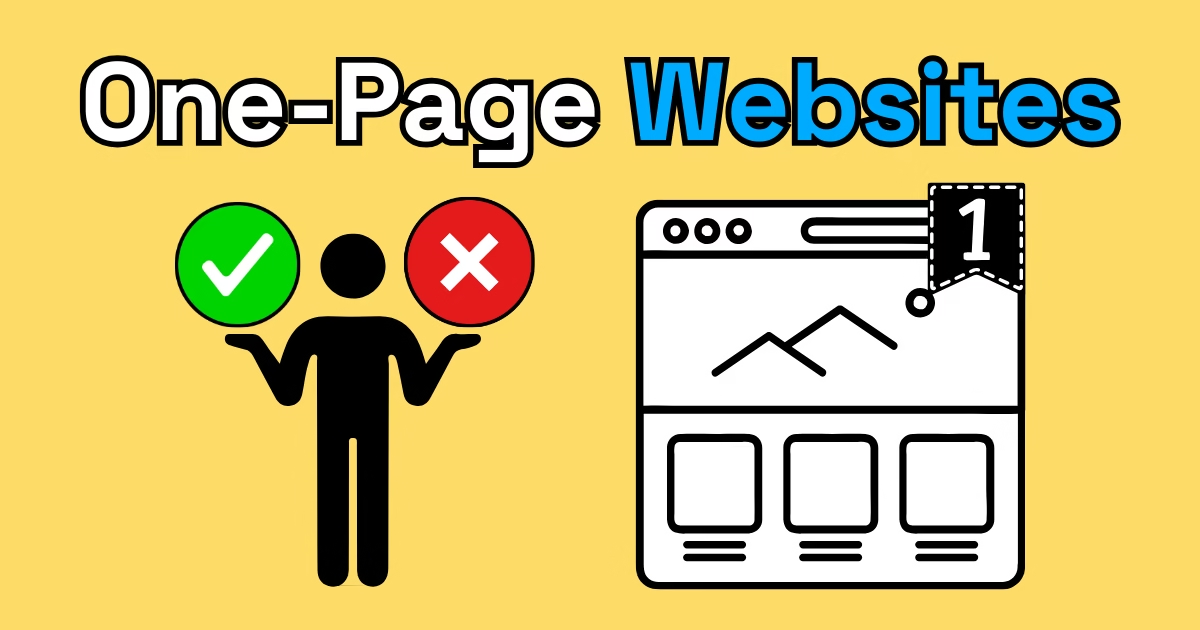
If you’re planning a new website for your business, you’ve probably come across one-page scrolling sites. They look slick, they’re easy to scroll through, and they seem simple enough — but are they the right choice for your business?
At JNB Marketing, we design websites that are not just nice to look at — but built to generate leads, rank in Google, and work across all devices. So in this article, we’ll explore the real pros and cons of a one-page website, and whether it’s a good fit for your goals.
Pros of a One-Page Scrolling Website
| Benefit | What It Means for Your Business |
|---|---|
| 1. Clean, Simple Layout | One-page sites reduce clutter and help users focus. Everything’s in one place — no clicking through loads of menus. Great for smaller businesses or startups. |
| 2. Great on Mobile | Most people scroll, not click — especially on phones. One-page layouts work naturally with mobile behaviour and keep visitors engaged. |
| 3. Strong Storytelling Flow | Perfect if you want to walk someone through your service in a step-by-step way (ideal for product launches or portfolios). |
| 4. Fast (When Designed Well) | Fewer pages = fewer loading issues. A lean, one-page site can be lightning fast if built correctly — good for SEO and user experience. |
| 5. Easy to Maintain | No complicated menus or structures to manage. Just one page to edit — ideal for businesses who don’t want to spend time constantly updating. |
| 6. Encourages Focused Messaging | One-page sites force you to be clear and concise. It helps businesses strip things back to the core message. |
| 7. Works Well for Local Lead Gen | With a solid CTA, click-to-call button, WhatsApp link and review section, a one-pager can convert fast — especially for trades and service-based businesses. |
Cons of a One-Page Scrolling Website
| Limitation | Why It Might Be a Problem |
|---|---|
| 1. Limited SEO Potential | You can only target a small number of keywords. If you want to rank for lots of services or locations (e.g. “plumber Poole,” “boiler installation Bournemouth”), you’ll need separate pages. |
| 2. Hard to Scale Later | One-page websites don’t grow well. If you expand your services or content later, it often ends up cluttered or confusing. |
| 3. Navigation Can Be Awkward | Users can’t jump easily between different topics. Unless your sections are clearly laid out with sticky navigation, it can become a scroll-fest. |
| 4. Long Load Time If Overloaded | Add too many videos, images, or animations and the page slows down — which hurts SEO and frustrates mobile users. |
| 5. Complex Tracking | Analytics tools like Google Analytics rely on page views to track behaviour. On one-page sites, you’ll need event tracking to understand what users are doing. |
| 6. Design Restrictions | One-pagers have to follow a vertical layout. If your content needs variety or complex layouts, multi-page gives you more design freedom. |
| 7. Not Ideal for Content-Heavy Sites | Blogs, e-commerce sites, or service providers with lots of locations or niche offerings benefit far more from multi-page builds. |
One-Page Website Examples That Do Work Well
One-page websites can be extremely effective — when used for the right purpose.
Great uses for a one-pager:
- Solo tradespeople who want a simple site with services, contact info, and testimonials
- Product launches or event landing pages
- Portfolios for creatives and photographers
- Startups or small local businesses that want a fast, clean, low-maintenance presence
Need help planning your page? Check out our essential website checklist
When You Shouldn’t Use a One-Page Website
You may want to avoid a one-pager if:
- You want to rank for lots of local keywords or services
- You need to showcase individual case studies or projects
- You run a multi-location business or want to scale later
- You plan to blog, create regular updates, or post articles
See: What Pages Should a Local Business Website Have?
Or read: How to Optimise Your Website for Local Search
Should You Choose a One-Page Website?
At JNB Marketing, we always start with your goals.
A one-page site can be beautiful, effective, and affordable — but it only works if your content is focused and your business suits that structure.
If you’re a local tradesperson or new service-based business, it might be perfect. If you’re planning to grow, rank for multiple keywords, or create ongoing content, we’ll recommend a clean, modern multi-page site that’s built to scale.